When the Jigokudani monkeys get in the water
The monkeys live at Jigokudani all year, but the scene shifts a lot with the months. Winter puts them in the hot water and brings the crowds with it. Late spring is for babies, while autumn can leave the pool nearly empty. Below are the months in turn, then the hour of day and how early to book.
Why the cold puts them in the water
Japanese macaques are the northernmost non-human primates. Thick winter coats let them live where snow lies deep for months, and around Jigokudani midwinter lows of 14–23 °F (-10 to -5 °C) are normal.
The hot spring pool is the warmest place around. On cold days many of the troop climb in and sit there with snow settling on their heads.
When the air warms, the reason to get in goes away. The monkeys still come down to the pool area most days because park staff put food out, yet they sit on the rocks around it instead of in the water.
No month guarantees bathing. On a few days each year no monkeys come down at all, which the listings for tours 1 and 4 both mention.
December to March, the snow months
These are the months of the famous photos. Highs sit around 32–37 °F (0–3 °C) with snow over the whole valley. On most days you will see monkeys in the water.
It is also when the park is busiest. At the edge of the pool you may wait your turn for a clear view, while the path from the parking turns icy underfoot.
Two tours change with the snow. The Shiga Kogen snow day, from ~$164, runs only in the snow season. It adds 1.5 hours of sledding and tubing at the ski resort above the park.
A closed road to the resort sends the tour to Zenko-ji instead, and nobody warns you ahead of time. In the same months the coach tour also collects skiers from Hakuba who want a day off the slopes.
Pickups from each resort are in the guide for skiers. Whatever you book, the valley sits well below freezing in the morning, and the packing guide lists the layers and ice cleats that help.
A full day that runs in every month
The coach tour from Nagano Station starts at Zenko-ji with a sake tasting and lunch to follow, then gives about 2.5 hours at the park, from ~$139. From December to March it adds a shuttle from Hakuba.
Thaw and babies from April to June
Snow melts through April, and the path turns to mud before it dries. The monkeys stay around the pool but rarely sit in it once the cold breaks. These months belong to the young instead.
Babies arrive from late spring, and the private car operator's listing names June as the birth season. A tiny monkey clinging to its mother's belly is a sight winter visitors miss.
On the private car and guide tour, from ~$132 per person, the full-day options follow the season, with cherry blossom at Garyu Park in April and a walk in the Shiga Kogen forest from May to October. Split between more people, it costs less each.
High summer in July and August
Summer highs at the park reach around 82 °F (28 °C), and the cedar forest is at its greenest. The walk is easy and dry apart from puddles after rain. Bathing is rare in the heat.
Summer is for watching the monkeys go about their day on the rocks. The young ones are big enough to play by now, and the crowds are thinner than in winter.
Bring a rain jacket and insect repellent for the forest. Many summer visitors pair the park with a hot-spring town, and our comparison of the add-on stops shows which tour includes what.
September to November, the quiet pool
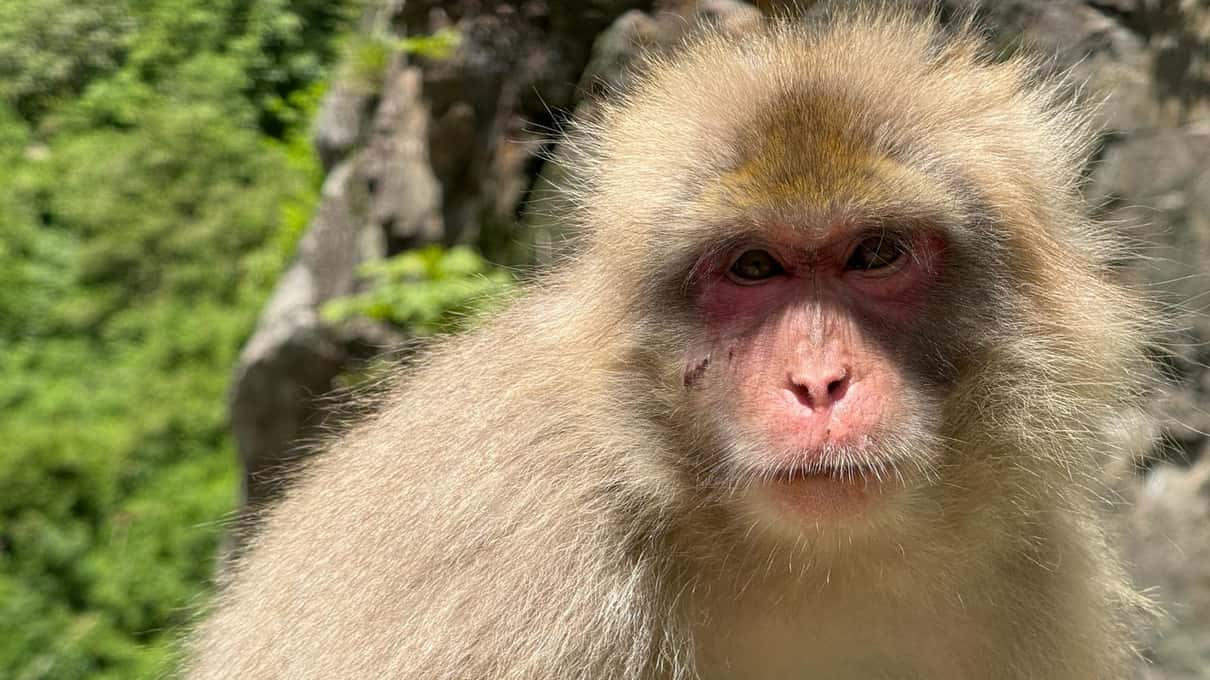
Mating season runs from about September to November. Fewer monkeys come down to the pool in those weeks, something the Shibu Onsen tour states plainly in its listing.
Coach tour reviewers describe autumn days with only a couple of monkeys around, none of them bathing. Their guide drove the group to a hot-spring town instead.
The upside is color. The leaves turn in late October and November, when the steaming gorge looks its best. Crowds are lighter than in winter as well.
If autumn is your only window, pick a tour whose other stops hold up on a quiet day. The Shibu Onsen tour, from ~$127, includes a public bath as well as a soba lunch.
Its guides have also found other stops when the pool was empty. Our trail guide has more on how tours handle a day when the troop stays away.
Month by month at a glance
| Months | Weather at the park | Monkeys | Crowds |
|---|---|---|---|
| December to March | Snow, highs around 32–37 °F (0–3 °C) | In the pool most days | Busiest |
| April to June | Thaw, then mild | Around the pool, babies from late spring | Moderate |
| July and August | Warm, highs around 82 °F (28 °C) | Around the pool, rarely in it | Moderate |
| September to November | Cool, with leaves turning from late October | Fewer come down in mating season | Lighter |
The hour of the day
Winter hours are roughly 9 am to 4 pm, stretching to 8:30 am to 5 pm in summer. Tours that head for the park first get there in the late morning.
The Shibu Onsen tour sets 10 am as its time at the park, while the Obuse day drives straight there from Nagano Station. The coach tour visits Zenko-ji and has lunch first, so it reaches the monkeys in the afternoon.
The Shiga Kogen day also comes to the park after lunch, once the snow play is done. Morning and afternoon both work, since the monkeys follow the feeding rather than the clock.
If you want the pool before most coaches arrive, start early on your own from Yudanaka. Getting there without a tour walks through the train and the bus.
How far ahead to book
The small tours fill first. Viator says the Shibu Onsen tour, with seven seats, is booked about 67 days ahead on average. The Obuse day often ranks among the most booked tours in Nagano.
The coach tour has far more seats, yet its listing still flags it as likely to sell out. Tours 1–5 all allow free cancellation up to 24 hours before, so an early booking costs you little if your plans move.